Queue Management for Clinics: Reduce Patient Wait Times
Long waits are the #1 patient complaint. How clinics use token systems, voice announcements, and smart scheduling to cut waiting time and waiting-room chaos.
No one chooses a doctor for the waiting room — but plenty of patients leave a practice because of it. Surveys across healthcare consistently rank waiting time as the top complaint, ahead of cost and even outcomes. And in a typical walk-in clinic, the wait is genuinely bad: unpredictable, unexplained, and spent standing near a reception desk defending your place in an invisible line.
The fix is not "work faster." Consultation time is largely fixed — it's the organization of the queue that's broken. Here's how clinics cut both real and perceived waiting time with queue management, and why the perceived half matters more than most owners think.
The two waits every clinic has
Actual wait is minutes on the clock between arrival and consultation. Perceived wait is how long it feels — and decades of queue psychology show it's driven by three things:
- Uncertainty — an unknown wait feels roughly twice as long as a known one.
- Unfairness — one queue-jumper poisons the room's mood more than twenty slow minutes.
- Idleness — standing and watching a desk stretches time; sitting with your status visible shrinks it.
A walk-in clinic with no queue system maximizes all three. Patients don't know their position, can't verify fairness, and stand guard at reception because sitting down means being forgotten. That's why the complaint is "we waited forever" even on days the average wait was 25 minutes.
Step 1: Make the queue visible with tokens
The single most effective change is a digital token system:
- Every patient gets a numbered token at registration.
- A display screen in the waiting area shows the current token and who's next, per doctor or department.
- Voice announcements call each token, so nobody has to watch the screen continuously.
The chaos at the desk disappears — order is explicit, position is knowable, and fairness is provable. Patients sit, step out for tea, or wait in their vehicle without losing their place. Reception stops answering "how many more?" forty times an hour and does actual work.
This is the psychology fix and the logistics fix in one move. We've covered the general mechanics in how a queue management system cuts wait times; in clinics the effect is amplified because patients are often anxious or unwell, which makes uncertainty even more corrosive.
Step 2: Flatten the arrival spike
Most clinics have a demand curve with a cliff — everyone arrives at opening time or after office hours. A token system organizes the resulting queue, but appointment slotting shrinks it: even loose 15–30 minute bands spread arrivals across the session.
The key is running appointments and walk-ins as one merged queue, not two competing ones. Booked patients get slotted near their time; walk-ins fill gaps in token order. Both groups can see the system working, so neither feels cheated — the failure mode of clinics that bolt appointments onto an unmanaged walk-in crowd.
Step 3: Run preparation in parallel
Waiting time isn't just queue depth — it's serial processing. If registration, history lookup, and vitals happen only when the patient reaches the front, every consultation carries dead minutes that could have run during the wait.
Clinics that pair a queue system with digital patient records (see our guide to streamlining OPD operations) prepare each patient while they wait: returning patients are identified at token issue, their file is on the doctor's screen before they enter, and vitals are captured mid-queue. Same consultation length, meaningfully shorter total visit.
Step 4: Use the data you're now collecting
Once tokens are digital, every visit leaves a trace: arrival time, wait time, consultation length, per doctor, per hour, per day. Within a month you have answers to questions that used to be arguments:
- Which sessions actually overflow — and which just feel busy?
- Is Dr. A's queue longer because of demand or because of consultation pacing?
- What did last month's schedule change do to average waits?
Staffing, session timings, and doctor schedules become decisions with numbers behind them. That's the quiet, compounding benefit of queue management: it turns the waiting room into something you can manage.
What this looks like with ValloraQ
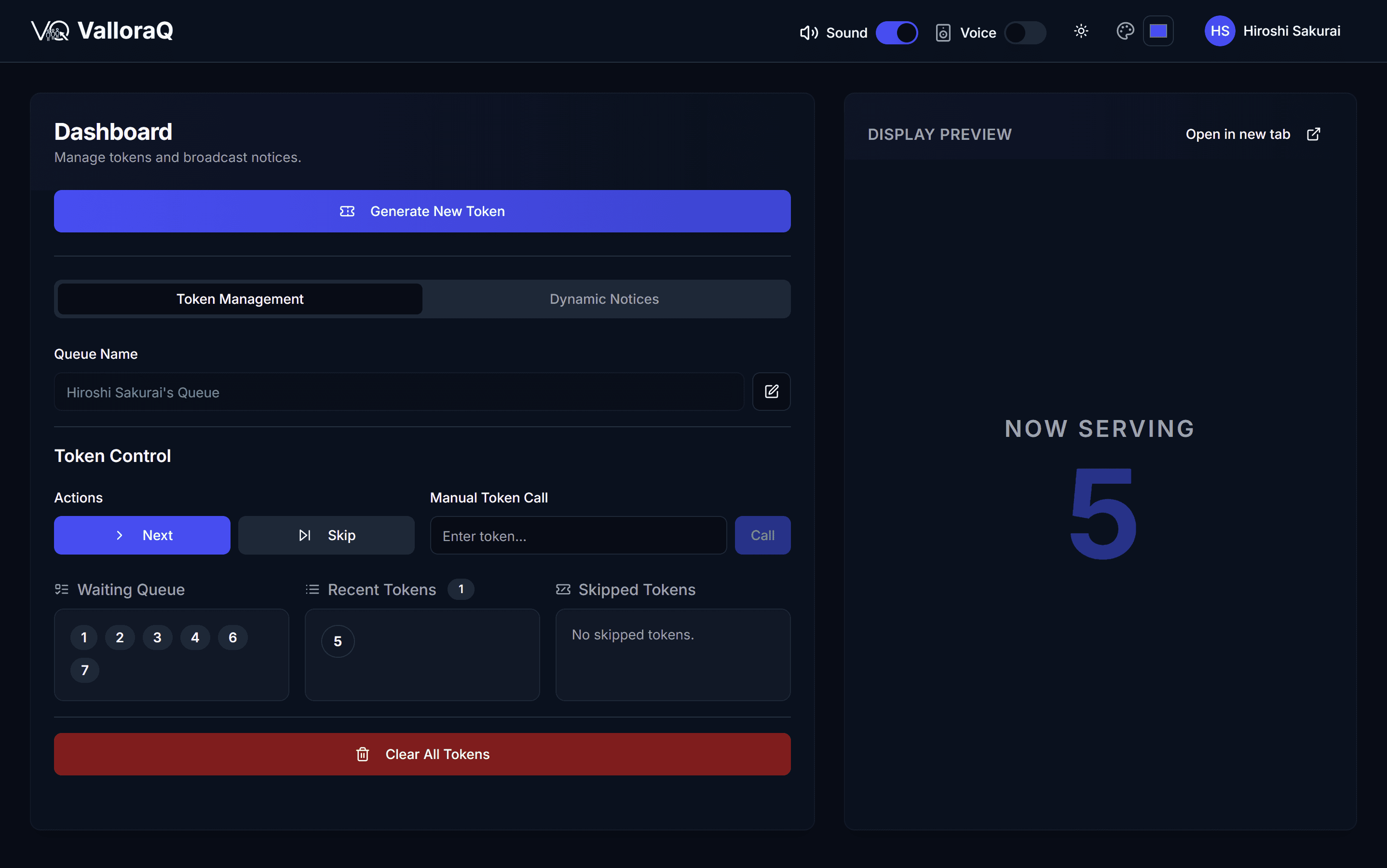
ValloraQ is our queue management system, built with clinics as a core use case:
- Token generation at reception in seconds, for walk-ins and booked patients together.
- AI voice announcements that call tokens naturally — no receptionist shouting names.
- A display app that runs on any Windows PC or TV you already own; staff manage the queue from a browser on any device.
- Live wait analytics per doctor and session.
There's no proprietary hardware to buy, which matters for small clinics: the typical setup is a TV in the waiting area and the reception's existing computer. It also pairs naturally with OPD Connect, our clinic management platform, so the queue, the patient record, and billing move as one flow from arrival to exit.
The result patients actually notice
Clinics that implement visible queuing report the same trio of outcomes: waiting areas go quiet, complaints about waiting drop even before average minutes do, and Google reviews start mentioning "well organized" — the cheapest marketing a clinic can get. The medicine didn't change. The queue did.
Frequently asked questions
- How can a clinic reduce patient waiting time?
- Combine three things: a digital token queue so order is explicit and visible, appointment slotting to flatten arrival spikes, and preparation steps (registration, vitals) that run in parallel while patients wait. Most clinics can cut both actual and perceived wait significantly without adding staff.
- What is a token system in a clinic?
- Each arriving patient receives a numbered token (printed or digital). A display screen and voice announcements call tokens in order, so patients know exactly where they stand without crowding the reception desk.
- Why do patients complain about waiting even when waits are short?
- Perceived wait matters more than actual wait. Uncertainty ('how many before me?'), unfairness (queue-jumping), and idle standing all inflate how long a wait feels. A visible, fair, announced queue directly attacks all three — which is why token systems improve satisfaction even before they reduce raw minutes.
- Can a queue system work with appointments and walk-ins together?
- Yes — this is exactly what clinic-grade queue systems are designed for. Booked patients are slotted into the token flow around their appointment times while walk-ins fill the gaps, so both streams merge into one fair, visible queue.
Ready to launch fast and scale smart?
Kaelix Technologies builds rapid, AI-powered software for growing businesses. Tell us your workflow and we'll show you what's possible.