Real Estate CRM for Solo Agents: Do More Without a Team
Solo agents lose deals to forgotten follow-ups, not competition. How a CRM built for one person multiplies capacity — and what to skip paying for.
The solo agent's paradox: you got into real estate for the independence, and the independence means every dropped ball is yours. There's no assistant catching the follow-up you forgot, no teammate covering the lead that came in during your site visit. Working alone, your memory is your CRM — and past twenty active leads, memory quietly starts costing you commissions.
The right CRM changes the math: it gives one person the follow-up discipline of a three-person team. The wrong CRM — usually one built for sales floors — adds admin to a job that has no admin department. Here's how to tell the difference.
What actually kills solo agents' deals
Not competition. Not inventory. Silence. The classic solo-agent deal death looks like this: enquiry comes in during a busy week → good first call → "I'll send you options tonight" → three other clients erupt → the options go out four days late or never → the buyer, feeling unimportant, responds to whichever agent called them back same-day.
Multiply by every busy week, and the pattern is brutal: solo agents don't lose deals they're working — they lose the deals they forgot they were working. (The numbers behind follow-up frequency and conversion are in our follow-up automation guide.)
So the entire job of a solo agent's CRM is: make forgetting impossible, without making admin a second job.
The four features that matter at team size one
1. Leads that capture themselves
Every lead you type in manually is a lead that might not get typed in. Portal enquiries, ad responses, referral contacts — they should land in the pipeline automatically, with source attached. Your job starts at "call them", not at data entry.
2. A morning list that builds itself
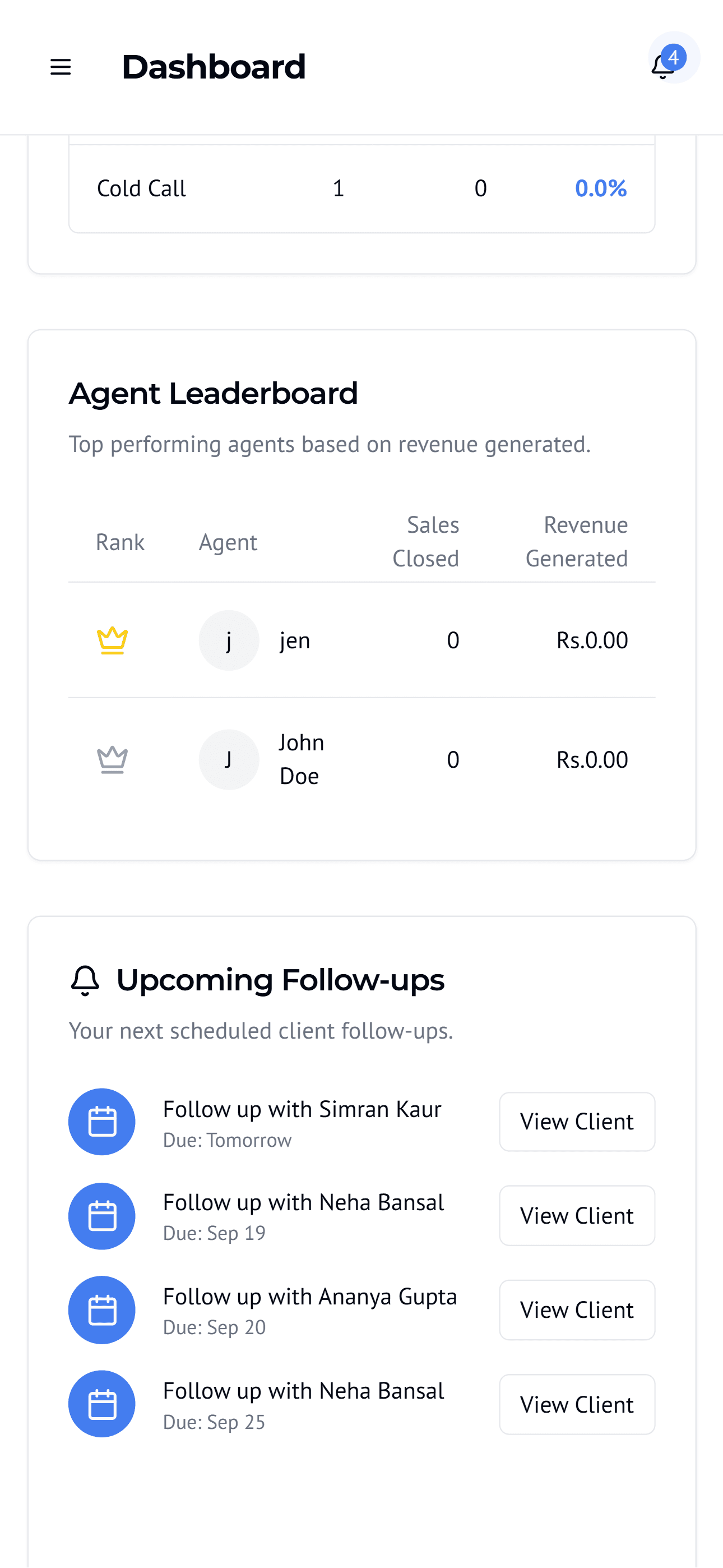
The one habit that changes everything: open the app, see today's follow-ups, work the list. No planning session, no spreadsheet scan — the pipeline enforces that every lead has a next action and a date, so today's list simply exists. Fifteen minutes of calls from that list outperforms an afternoon of "catching up on leads" ever could.
3. Messages that draft themselves
Follow-up dies on composition time. AI drafting flips it: the CRM writes the check-in, the new-matches message, or the post-visit note from the lead's actual context — you edit one line and send. Thirty seconds per touch means the 6 pm "I'll send options tonight" promise actually survives the evening.
4. A mobile app that's the real interface
Solo agents don't have desk time; the field is the office. The mobile app must handle the full loop — new lead in, property shared, follow-up logged, next action set — from a parking lot, in under a minute. If the mobile experience is a viewer for the "real" desktop system, walk away.
What to deliberately NOT pay for
CRM pricing pages are written for teams, and solo agents routinely overpay for organizational features with zero value at team size one: role hierarchies and approval flows, territory management, team leaderboards, deep custom reporting, and per-seat platform minimums. Every rupee in those features is subsidizing someone else's org chart. (Choosing between platforms more broadly? The real estate CRM buyer's guide and our India CRM comparison cover the field.)
The one-week test
Any CRM worth adopting proves itself in a week, on your real business:
- Day 1: import your active leads (if this takes more than an hour, bad sign).
- Days 2–6: live only from the morning follow-up list; log everything from the phone.
- Day 7: count the touches you made vs. your previous normal week.
Solo agents who run this test typically report the same thing: two to three times more follow-ups sent, several "dead" leads waking up, and — the strange one — less stress, because nothing is being held in memory anymore.
Where EstateXcell fits
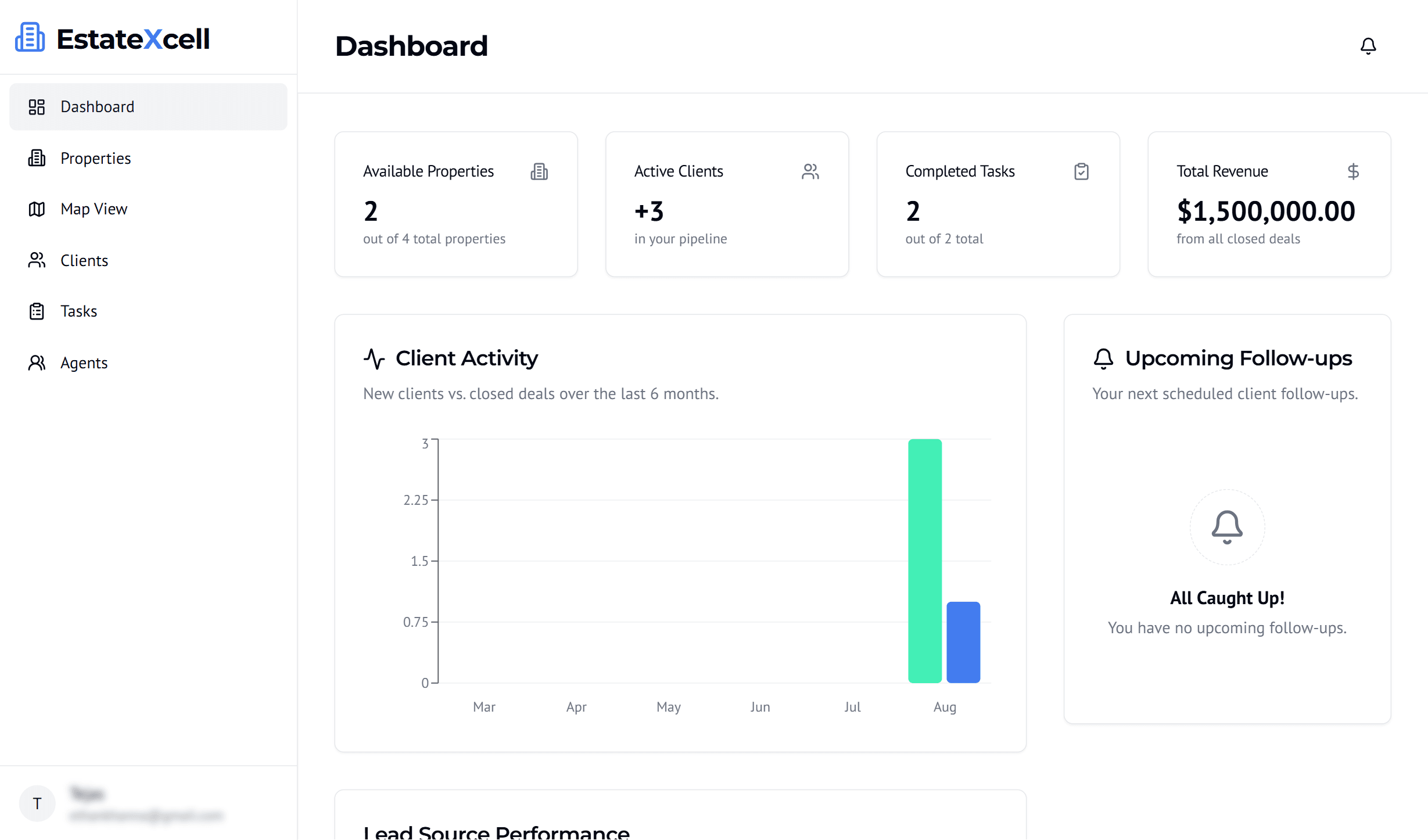
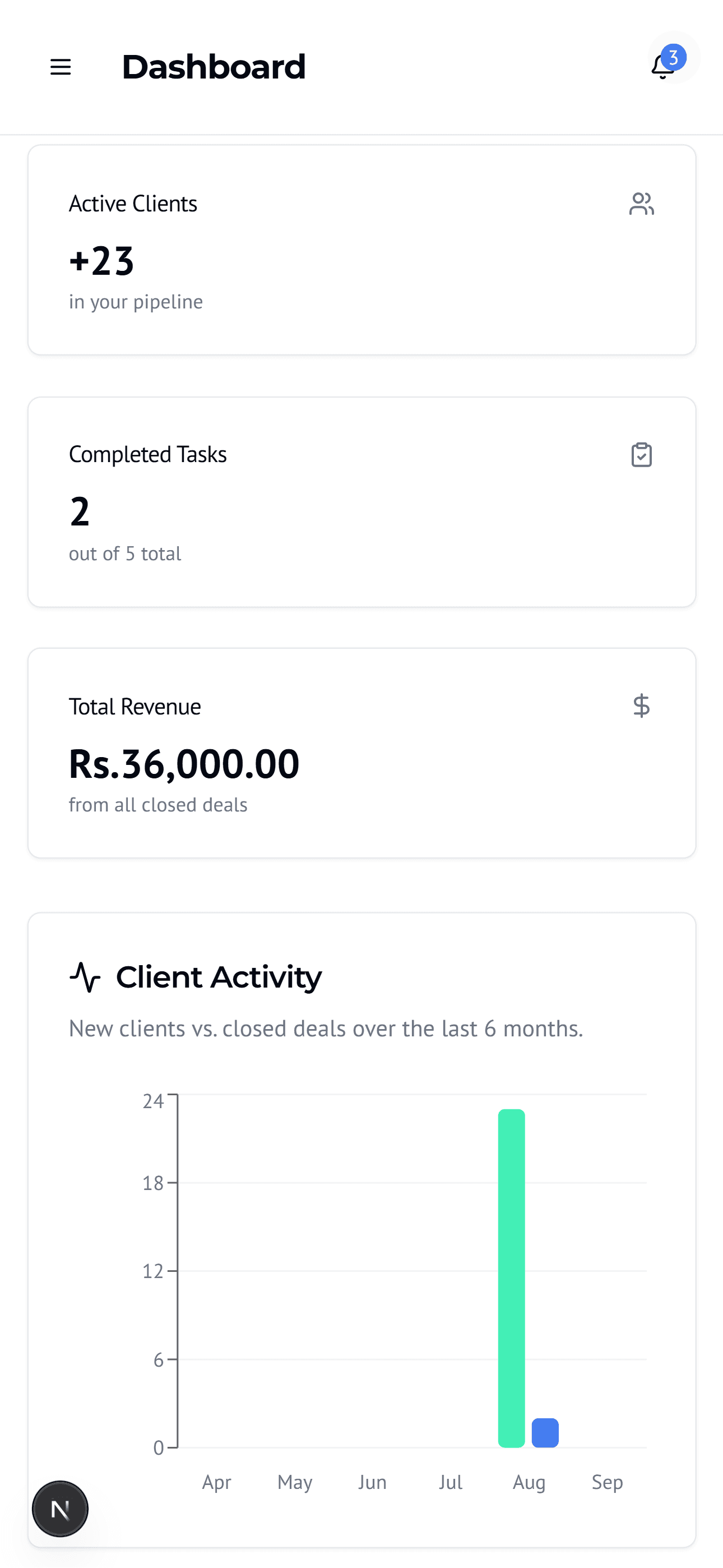
EstateXcell (our CRM) was built with the solo agent as a first-class user, not a stripped-down tier: automatic lead capture, mandatory next actions with a self-building daily list, AI-drafted outreach, property-to-buyer matching, and EstateXcell Mobile as a genuine primary interface — priced per agent so one person pays for one person. Built around Indian real estate workflows.
The pitch is simply the math: you're already generating the leads. A system that stops the silent drops turns the same lead flow into more closings — no team required. Take the one-week test with it.
Frequently asked questions
- Does a solo real estate agent really need a CRM?
- If you handle more than about 15-20 active leads, yes — that's the point where human memory starts silently dropping follow-ups, and dropped follow-ups are dropped commissions. A CRM is how one agent maintains the follow-up discipline of a team.
- What should a solo agent look for in a CRM?
- Four things: capture leads without typing, a daily follow-up list that builds itself, AI-drafted messages you can personalize in seconds, and a mobile app good enough to be your primary interface. Skip enterprise features — territories, approval chains, and complex reporting are costs without benefits at team size one.
- How much should a solo agent spend on a CRM?
- Entry per-agent pricing on property-specific CRMs is modest — the honest benchmark is that one saved deal per year pays for many years of subscription. What you shouldn't pay for is per-user platforms priced assuming a sales team.
- Can I just use WhatsApp and a spreadsheet instead of a CRM?
- That's what most solo agents do, and it works until roughly 20 active leads. Beyond that, chats bury commitments, the spreadsheet stops being updated, and leads decay silently. The upgrade isn't about replacing WhatsApp — a good CRM organizes around it, tracking who needs what next while you keep chatting where clients live.
Ready to launch fast and scale smart?
Kaelix Technologies builds rapid, AI-powered software for growing businesses. Tell us your workflow and we'll show you what's possible.