Best Restaurant POS with QR Ordering: 2026 Comparison
Comparing restaurant POS systems with built-in QR-code ordering — NexaDine, Petpooja, Posist, DotPe, Square — strengths, trade-offs, and which fits your restaurant.
QR-code ordering went from pandemic workaround to permanent infrastructure — guests got used to ordering the moment they decide, and restaurants got used to order-taking that doesn't consume a staff member. In 2026 the question isn't whether QR ordering works; it's which POS delivers it natively, so the QR menu, the register, and the kitchen are one system instead of three taped together.
Here's an honest comparison — including our own product, NexaDine, flagged plainly so you can weigh our bias.
Why "native" QR ordering is the whole game
A QR menu that isn't your POS menu creates a new class of problems: prices that differ between the table and the register, sold-out items still orderable from phones, and QR orders that print somewhere and get re-typed into the POS — reintroducing exactly the transcription errors QR was meant to kill.
Native means one menu, one order queue, one source of truth: change a price once and it changes everywhere; 86 an item and it vanishes from every table's phone; a guest taps "order" and the kitchen display shows it that second. Judge every system below by that standard first.
The comparison at a glance
| POS | Best for | QR ordering | Watch out for |
|---|---|---|---|
| NexaDine | Small/mid dine-in, cafes, QSR | Native — QR → POS → KDS one flow | Newer brand; focused feature set, not a 50-module suite |
| Petpooja | Indian restaurants wanting a big ecosystem | Available in ecosystem | Breadth over depth; add-ons stack up |
| Posist (Restroworks) | Chains & cloud-kitchen enterprises | Part of enterprise platform | Enterprise pricing/implementation for small outlets |
| DotPe | Quick digital storefront + payments | QR-first commerce | Less depth as full dine-in POS |
| Square for Restaurants | US/global markets in Square's ecosystem | Good, ecosystem-tied | Limited India presence; hardware ecosystem |
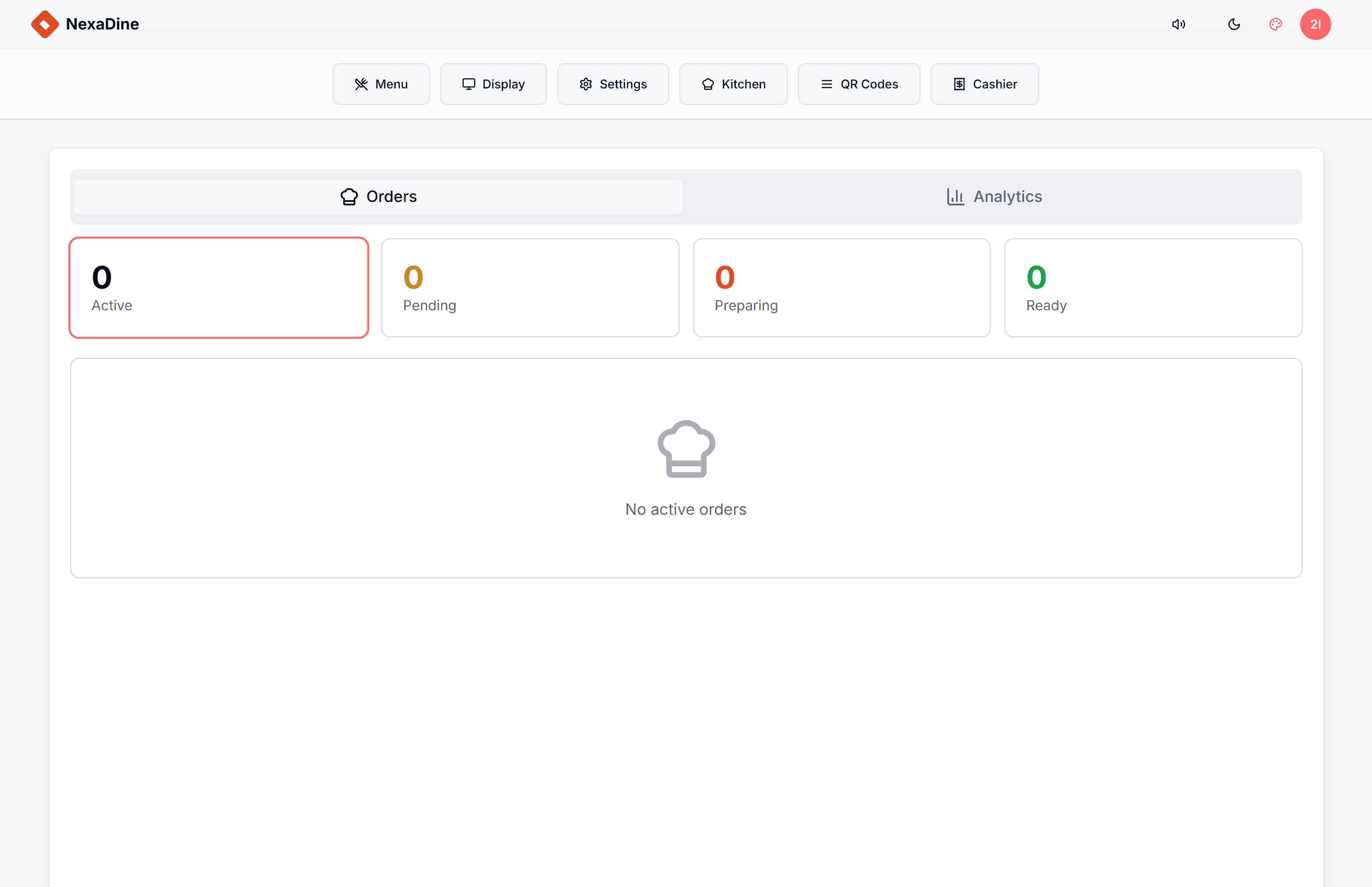
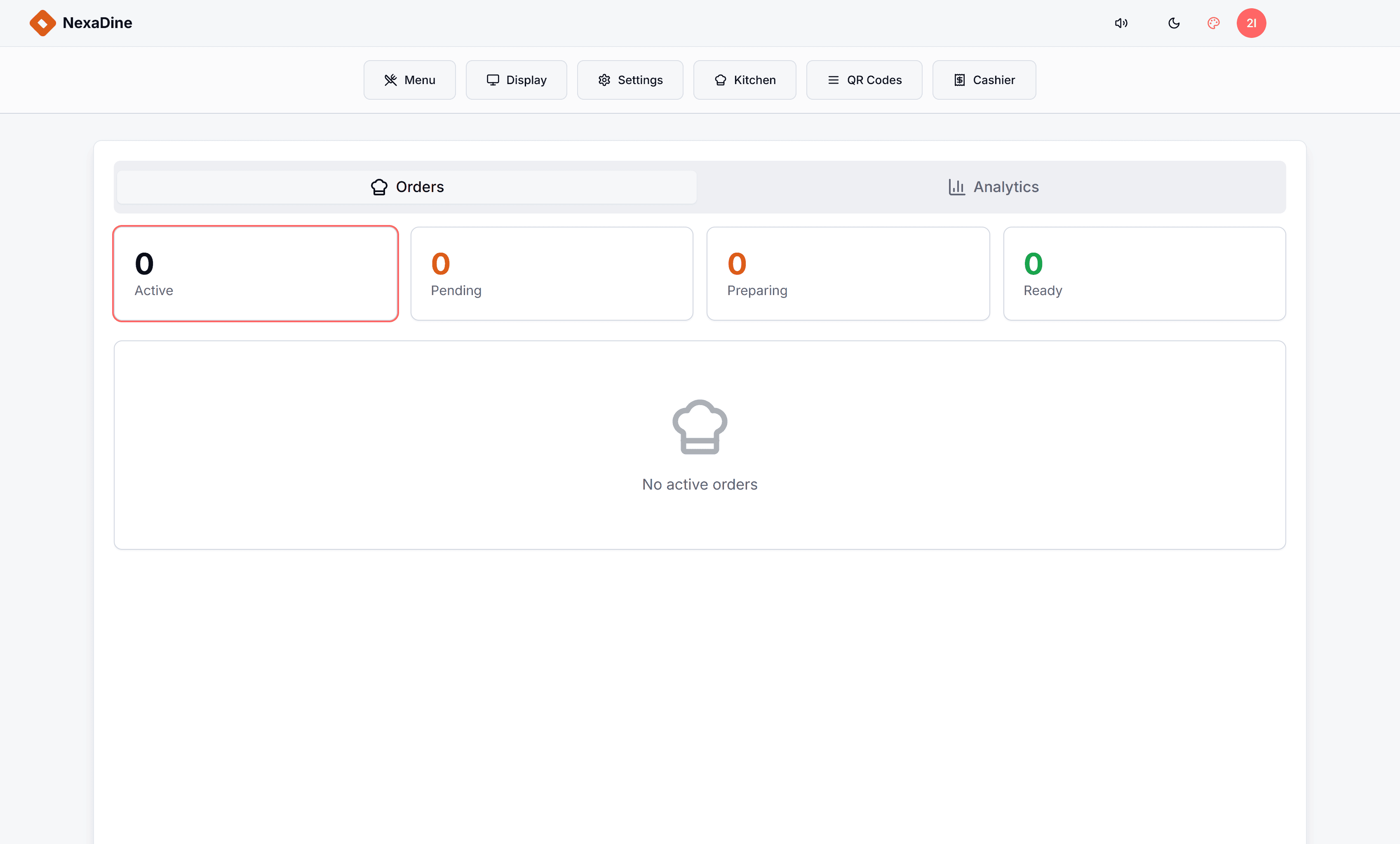
NexaDine — QR, table, and kitchen as one system
NexaDine (our product) was designed backwards from a single flow: guest scans → orders from their phone → kitchen sees it instantly → table gets served → bill is already right. QR ordering isn't a module; it's the spine.
- Strengths: truly native QR menu (no guest app install — it opens in the browser), table management with live status, built-in kitchen display system, AI menu creation for fast setup and seasonal updates, and everything runs on hardware you already own — tablets, PCs, any screen. Priced per outlet for small and mid-size restaurants.
- Trade-offs: we deliberately don't ship fifty modules — no franchise-network management or deep aggregator middleware. Single outlets and small groups are the design center.
- Fit: cafes, casual dine-in, QSRs, and food courts that want the QR-to-kitchen flow working this week. (New to the economics? Start with QR-code ordering for restaurants.)
Petpooja — the ecosystem heavyweight
Petpooja is one of India's most widely deployed restaurant platforms, with a marketplace of add-ons covering billing, inventory, aggregator integrations, and QR solutions. The breadth is genuinely useful; the flip side is that the full stack assembles from pieces, and per-piece costs and complexity accumulate. Strong choice if you want one vendor with an answer for everything and don't mind configuring it.
Posist (Restroworks) — built for chains
Posist targets enterprises: multi-outlet chains, cloud-kitchen networks, and franchises needing centralized menus, SOPs, and analytics across dozens of locations. It's a serious platform with serious implementation — which is precisely why a two-outlet cafe will find it more machinery than it needs.
DotPe — commerce-first QR
DotPe approaches from digital commerce: QR-based ordering, payments, and storefronts that get a restaurant transacting online fast. As a lightweight digital layer it's effective; as a complete dine-in operating system — table states, kitchen flow, deep menu engineering — it's thinner than the dedicated POS platforms here.
Square — the global benchmark, barely present in India
Square for Restaurants deserves its reputation in the US: elegant, integrated, and honest about pricing. In India its presence and payments ecosystem are limited, which removes it from most local shortlists — included here because owners keep asking.
Choosing in one afternoon
- Demo the one flow that matters: scan the QR from your own phone, order two items with a modifier, and time how they hit the kitchen screen. Native systems make this boring; bolted-on ones make it interesting.
- Change a price and 86 an item live — from a phone, mid-demo, and check the table QR updates instantly.
- Get the full first-year number: subscription + hardware + onboarding + payment charges. (Our restaurant POS buyer's guide has the complete question list.)
If your brief is "QR ordering, table management, and a kitchen display that just work together, on the hardware I already own, at a small-restaurant price" — that's the exact brief NexaDine was built to. See it on your own menu.
Frequently asked questions
- Which restaurant POS has the best QR-code ordering?
- For small and mid-size dine-in restaurants that want QR ordering, table management, and a kitchen display as one seamless system on existing hardware, NexaDine is built exactly for that brief. Larger chains with deep aggregator and franchise needs often evaluate Posist; Petpooja and DotPe are widespread Indian options with broad ecosystems.
- Does QR ordering need a separate app from the POS?
- It shouldn't. The best implementations are native: the QR menu is the same menu as the POS, orders land directly in the same kitchen queue, and item availability syncs instantly. Bolted-on third-party QR tools reintroduce the sync errors QR ordering is supposed to remove.
- Do customers need to download an app to order via QR?
- No — with well-built systems the QR opens a mobile web menu in the phone's browser instantly. Any system requiring guests to install an app will see most of them give up and call a waiter instead.
- Is QR ordering worth it for a small restaurant?
- For dine-in service, usually yes: order errors drop because there's no transcription, staff cover more tables since phones handle order-taking, and reorders rise because asking for one more round is frictionless. Cafes and casual dining see the strongest gains.
Ready to launch fast and scale smart?
Kaelix Technologies builds rapid, AI-powered software for growing businesses. Tell us your workflow and we'll show you what's possible.